Introduction
Pursuing higher education in the United Kingdom has long been a dream for many international students, drawn by its world-renowned universities, cutting-edge research facilities, and vibrant cultural scene. However, the financial burden of tuition fees, living expenses, and travel can be daunting, especially for those from developing countries. This is where fully funded UK scholarships for international students come into play, offering a lifeline to talented individuals who might otherwise be unable to afford such opportunities. These scholarships cover not just tuition but also living costs, travel, and sometimes even additional allowances, making them truly transformative.
In 2026, the landscape of UK scholarships remains highly competitive yet accessible, with programs designed to attract global talent and foster international collaboration. The UK government, universities, and private foundations invest billions annually in these initiatives, recognizing the value of diverse perspectives in academia and beyond. For instance, scholarships like Chevening and Commonwealth aim to build future leaders who can contribute to global challenges such as climate change, public health, and sustainable development.
Why focus on fully funded options? Partial scholarships might leave students scrambling for additional funding, but fully funded ones provide peace of mind, allowing recipients to concentrate on their studies and personal growth. According to recent data, international students contribute over £40 billion to the UK economy each year, underscoring the mutual benefits of these programs. For students from Asia, Africa, Latin America, and beyond, these scholarships represent more than financial aid—they are gateways to professional networks, cultural immersion, and career advancement.
This guide explores the top fully funded UK scholarships for international students in 2026, detailing eligibility, benefits, and application strategies. Whether you’re aiming for a master’s or PhD, understanding these opportunities can significantly boost your chances. We’ll cover government-backed schemes, university-specific awards, and tips to make your application stand out. By the end, you’ll have a roadmap to navigate this rewarding yet rigorous process.
The appeal of studying in the UK lies in its academic excellence—home to institutions like Oxford, Cambridge, and Imperial College London, which consistently rank among the world’s best. International students benefit from innovative teaching methods, research opportunities, and a multicultural environment that prepares them for global careers. However, post-Brexit visa changes and rising costs have made scholarships even more crucial. In 2026, with economic uncertainties lingering, these fully funded programs are expected to see record applications, so early preparation is key.
Moreover, these scholarships align with broader goals like the UN Sustainable Development Goals, emphasizing equity in education. For international students, securing one can lead to lifelong advantages, including alumni networks that span governments, NGOs, and corporations. As we delve deeper, remember that persistence and authenticity in your application are vital—scholarship committees seek not just academic stars but individuals with vision and drive.
What Are Fully Funded Scholarships?
Fully funded scholarships in the UK go beyond covering tuition fees; they encompass a holistic support package designed to eliminate financial barriers. Typically, these include full tuition waivers, monthly stipends for living expenses (often around £1,000–£2,000), return flights, health insurance, and sometimes allowances for books, conferences, or family support. Unlike loans or part-time work requirements, these awards allow students to focus entirely on their academic and professional development.
In the context of UK education, “fully funded” means the scholarship provider bears all major costs associated with the degree. For international students, this is particularly valuable as non-EU/EEA tuition fees can exceed £20,000–£40,000 per year for postgraduate programs. Living costs in cities like London add another £15,000 annually, making self-funding impractical for many.
These scholarships are offered by various entities: government bodies like the Foreign, Commonwealth & Development Office (FCDO), prestigious trusts such as Gates or Rhodes, and universities themselves. They target specific demographics—emerging leaders, researchers in STEM fields, or students from low-income countries—to promote diversity and innovation.
For 2026 intakes, fully funded scholarships emphasize impact: applicants must demonstrate how their studies will benefit their home countries or global society. This shift reflects a post-pandemic focus on resilience and equity. Programs like Gates Cambridge prioritize leadership potential, while others like Clarendon focus on academic excellence across disciplines.
It’s important to distinguish fully funded from partially funded scholarships. The latter might cover only fees or a portion of living costs, requiring supplementary income. Fully funded ones, however, ensure comprehensive coverage, often including visa fees and arrival allowances. This level of support is rare but available to those who meet rigorous criteria, making them highly sought after.
International students should note that these scholarships often come with post-study obligations, such as returning home for a set period to apply learned skills. This “brain circulation” model benefits both the UK and the student’s origin country, fostering long-term partnerships.
General Eligibility Criteria for UK Scholarships
While each scholarship has unique requirements, common eligibility threads run through most fully funded UK programs for international students. First and foremost, applicants must hold a strong academic record—typically a bachelor’s degree with a 2:1 (upper second-class) honors or equivalent GPA of 3.0/4.0 or higher. For PhD scholarships, a relevant master’s is often required.
Nationality plays a key role; many scholarships target students from specific regions, such as Commonwealth countries or developing nations. For example, applicants must be citizens or refugees from eligible countries and intend to return home after studies. Age limits are rare, but some prioritize early-career professionals.
Work experience is another pillar, especially for leadership-focused awards. Chevening requires at least two years of professional experience, emphasizing influence in one’s field. Language proficiency is mandatory—IELTS scores of 6.5–7.0 or equivalent TOEFL are standard, though some programs waive this for English-medium educated applicants.
Financial need is assessed in many cases; candidates must prove they cannot afford UK study without aid. This involves submitting income statements or essays on economic background. Additionally, scholarships like Rhodes seek evidence of character, service, and leadership through references and personal statements.
Health and character checks are common, including police clearances and medical exams. Disabled applicants may receive accommodations, with extra funding for accessibility needs.
For 2026, diversity is emphasized—women, underrepresented minorities, and those from conflict zones are encouraged to apply. Committees evaluate not just qualifications but potential impact, so essays linking personal goals to global issues are crucial.
Finally, applicants must secure admission to a UK university independently, as scholarships are often contingent on this. Researching course fit and preparing strong applications early is essential.
Top Fully Funded UK Scholarships for International Students in 2026
Chevening Scholarships
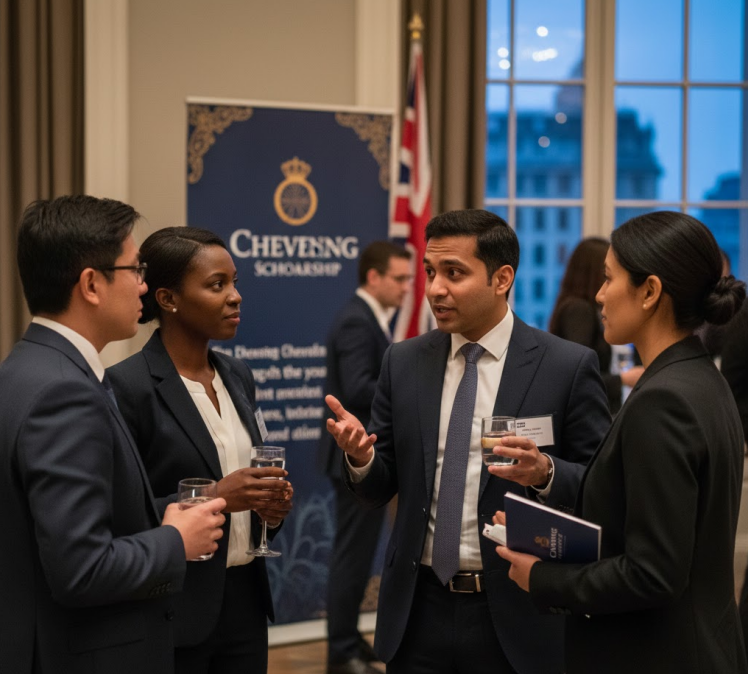
Chevening Scholarships, funded by the UK government, are among the most prestigious fully funded awards for international students pursuing one-year master’s degrees. Aimed at emerging leaders, they support over 1,500 scholars annually from more than 160 countries.
Eligibility: Candidates need a bachelor’s degree, at least two years’ work experience, and leadership potential. They must commit to returning home for two years post-study.
Benefits: Full tuition, monthly stipend (around £1,200–£1,500), return flights, arrival allowance, and networking events. Scholars join a global alumni network of influencers.
Application Process: Online application with essays on leadership, networking, study plans, and career goals. Requires two references and university offers.
Deadlines: For 2026-27, applications typically open in August and close in November, though exact dates for future cycles should be checked on the official site.
Chevening emphasizes themes like democracy, human rights, and climate action, making it ideal for policy-makers and activists. Success rates are low (around 2-3%), so tailoring applications to UK foreign policy priorities is key.
Gates Cambridge Scholarships
Established by the Bill and Melinda Gates Foundation, Gates Cambridge offers about 80 full-cost scholarships yearly for postgraduate study at the University of Cambridge. It focuses on outstanding intellectuals committed to improving lives.
Eligibility: Open to non-UK citizens for any subject, with emphasis on PhD (two-thirds of awards). Criteria include academic excellence, course fit, leadership, and societal impact.
Benefits: University fees, £21,000 maintenance allowance (2024-25 rate), single airfares, visa costs, and discretionary funds for conferences (£500–£2,000), children (£11,604 for one), fieldwork, and hardship.
Application Process: Integrated with Cambridge’s graduate application; includes a Gates-specific statement on fit with criteria. Two rounds: US citizens (October) and international (December/January).
Deadlines for 2026-27: Not yet announced, but historically mid-October for US and early December/January for others.
With over 2,000 alumni worldwide, this scholarship builds a network of change-makers in fields like global health and technology.
Rhodes Scholarships
The Rhodes Scholarship, the oldest international award, funds postgraduate study at the University of Oxford for talented young leaders. It selects about 100 scholars annually from 20+ constituencies.
Eligibility: Age 19-25 (varies by region), strong academics, character, service, and leadership. Open to citizens of eligible countries or those with ties.
Benefits: Course fees, £20,400 annual stipend, flights, visa/IHS fees, settling-in allowance, and support for additional years if needed.
Application Process: Online with essays, references, and interviews. Constituency-specific deadlines.
Deadlines: For 2026 entry, applications closed; reopen in mid-2026 for 2027 entry.
Rhodes emphasizes public service, with alumni including presidents and Nobel laureates. The Character, Service, and Leadership Programme enhances personal development.
Commonwealth Master’s Scholarships
Funded by the FCDO, these scholarships enable students from low- and middle-income Commonwealth countries to pursue master’s degrees in the UK.
Eligibility: Citizenship in eligible countries (e.g., India, Nigeria, Pakistan), 2:1 degree, financial need, and commitment to development themes like health or climate.
Benefits: Full tuition, £1,452 monthly stipend (£1,781 in London), flights, study travel grant, and child allowances if applicable.
Application Process: Online via CSC portal, plus nomination by agencies or NGOs. Requires transcripts, references, development impact statements, and university applications.
Deadlines: For 2026-27, closed; outcomes by July 2026.
Aligned with sustainable development, these awards support over 150 scholars yearly, focusing on impactful careers.
GREAT Scholarships
The British Council’s GREAT Scholarships offer £10,000 towards master’s tuition for students from 18 countries. Over 140 available in 2026-27 across 60+ UK universities.
Eligibility: Passport holders from participating countries (e.g., China, India, Nigeria), accepted to an eligible course.
Benefits: £10,000 fee contribution, welcome/networking events.
Application Process: Apply via university websites; varies by institution.
Deadlines: Not specified universally; check per country/university, often May-June.
This program promotes UK education in subjects like law, engineering, and humanities.
Clarendon Fund Scholarships
Oxford’s Clarendon Fund awards 200+ fully funded graduate scholarships based on merit.
Eligibility: Open to all nationalities and fields; automatic consideration for course applicants.
Benefits: Full fees and living grant for course duration.
Application Process: No separate form; apply to Oxford by December/January deadline.
Deadlines for 2026: Course-dependent, typically January.
Clarendon fosters a diverse community, supporting scholars in all disciplines.
Edinburgh Global Research Scholarships
The University of Edinburgh offers PhD scholarships to international students.
Eligibility: Outstanding academics starting PhD in 2026-27.
Benefits: Full fees and stipend (details vary).
Application Process: Apply via university portal.
Deadlines: Typically February-March.
These focus on research excellence across sciences and humanities.
Other Notable Scholarships
- Imperial College London PhD Scholarships: Up to 10 fully funded for STEM fields. Eligibility: High academics; benefits include fees and stipend.
- University of Bristol Think Big Scholarships: Up to £5 million invested, offering £5,000–£20,000.
- UCL Global Undergraduate Scholarship: For low-income backgrounds, covering fees and living costs.
These university-specific awards complement national ones, often with easier applications.
Application Tips and Strategies
Securing a fully funded UK scholarship requires meticulous preparation. Start 12-18 months in advance: research programs, align your profile, and gather documents.
Craft compelling essays—focus on your story, challenges overcome, and future impact. Use STAR method (Situation, Task, Action, Result) for leadership examples.
Secure strong references from mentors who know your work intimately. Tailor applications to each scholarship’s ethos, e.g., development focus for Commonwealth.
Prepare for interviews: Practice articulating goals and UK study benefits. Improve English if needed.
Avoid common pitfalls like generic statements or missing deadlines. Seek feedback from alumni via LinkedIn.
Leverage resources like British Council webinars and university advising.
Challenges and How to Overcome Them
International applicants face hurdles like visa delays, cultural adjustment, and competition (success rates <5%). Overcome by applying early, joining support groups, and building resilience.
Financial proof for visas can be tricky; scholarships provide letters to assist.
Academic culture shock—UK emphasizes independent research—can be mitigated through pre-arrival orientations.
Post-study, returning home might feel limiting, but view it as an opportunity to implement change.
Success Stories
Take Aisha from Nigeria, a Chevening scholar who studied public health at LSE and now leads NGO initiatives combating disease outbreaks. Or Raj from India, a Gates Cambridge PhD graduate revolutionizing AI for agriculture.
These stories illustrate how scholarships propel careers, creating ripple effects in communities.
Conclusion
Fully funded UK scholarships for international students in 2026 offer unparalleled opportunities to access top-tier education without financial strain. From Chevening’s leadership focus to Clarendon’s academic emphasis, these programs empower global talent.
As applications intensify, remember: authenticity and preparation are your allies. Research thoroughly, apply widely, and envision your impact. The UK awaits those ready to contribute to a brighter future—seize the chance.